01
How the Measurement Works
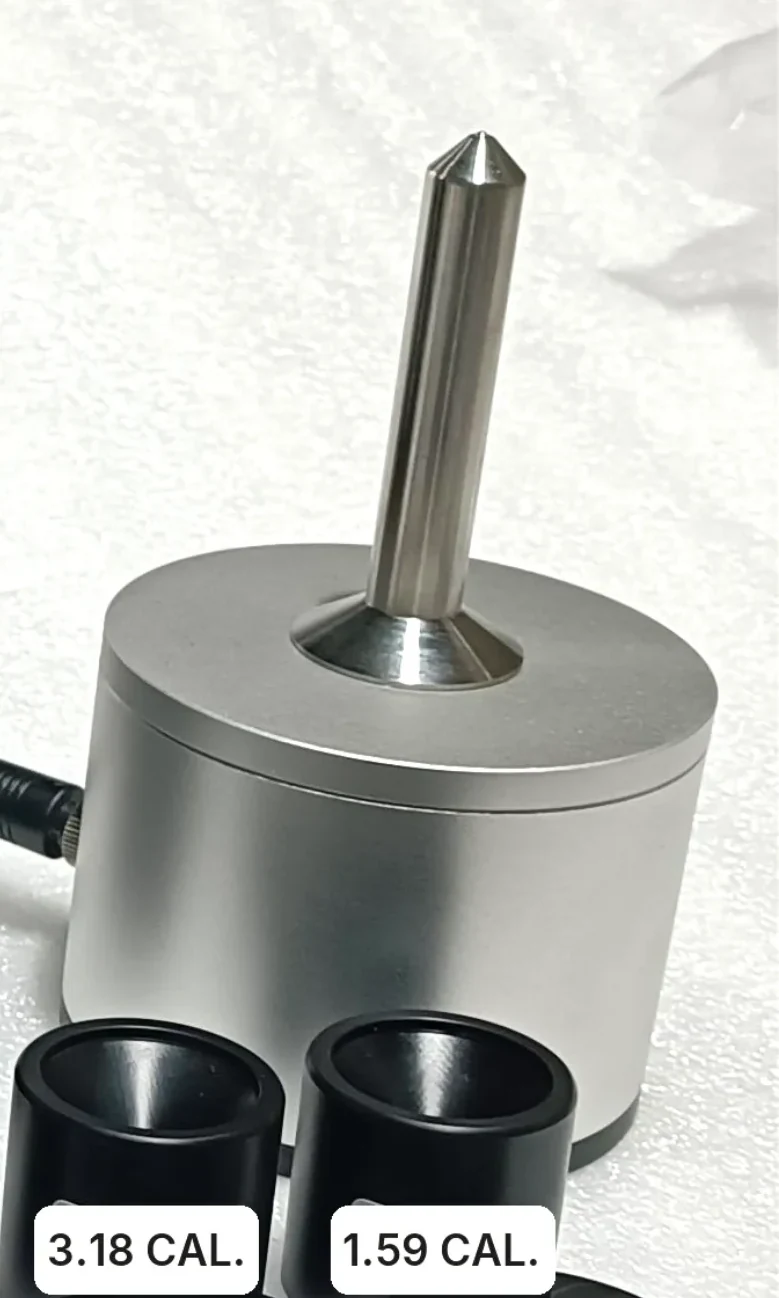
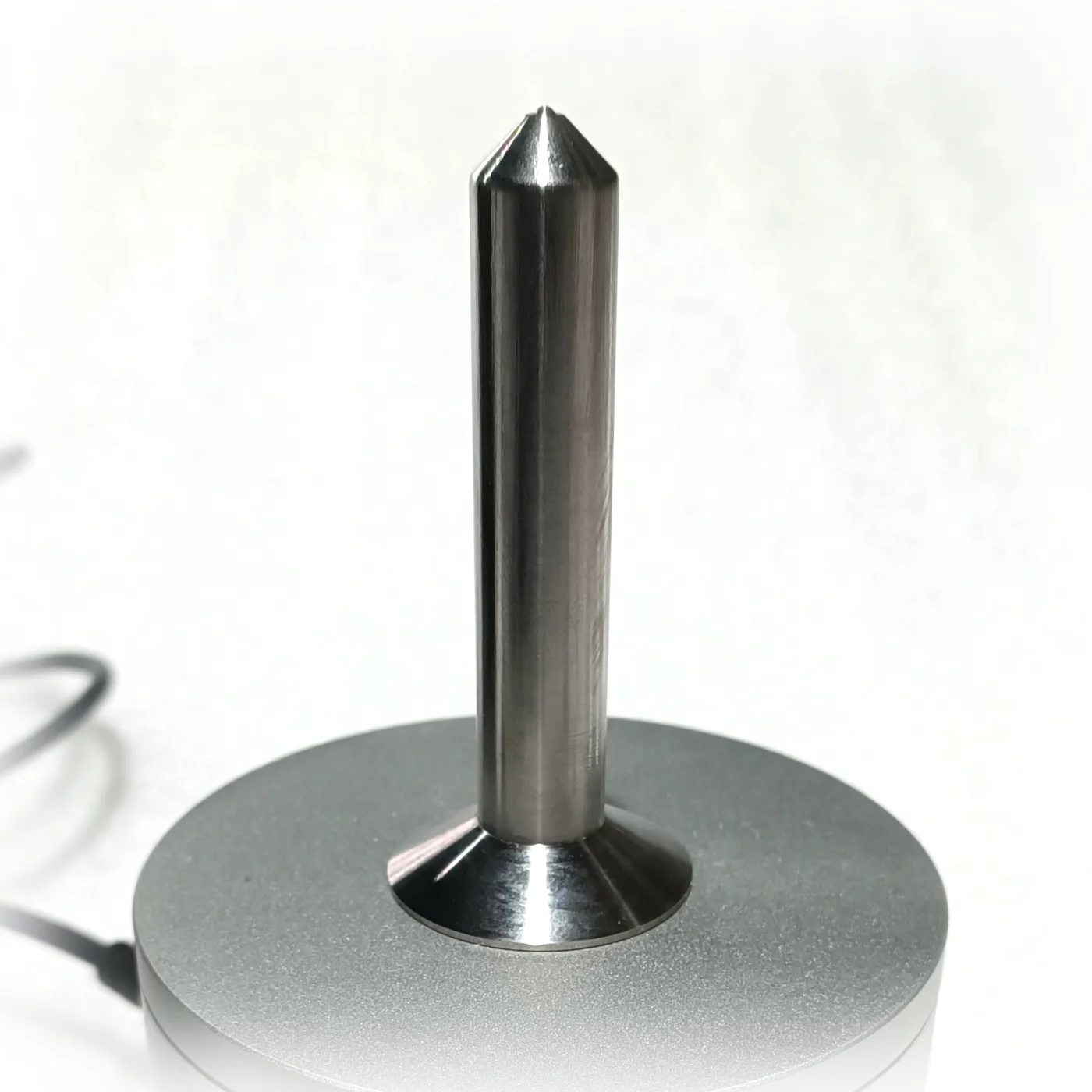
The probe contains a magnet and a Hall-effect sensor. A Hall-effect sensor responds to a change in magnetic field with a change in voltage. When a steel ball comes near the probe tip it bends the field of the probe magnet, and the closer the ball, the stronger the effect. [1]
In use, the ball sits inside the bottle or behind the wall and the probe touches the outside. The ball is pulled to the point directly opposite the probe tip, so the only thing between them is the wall. What the instrument actually measures is the distance from probe tip to ball — wall thickness is read indirectly from that gap. [1]
Because the reading is a physical distance, it does not depend on what the wall is made of, as long as the material is not magnetic. There is nothing to set for plastic versus glass.
02
Other Names for the Same Instrument
Buyers and suppliers use several names for this type of gauge. They all describe the same method:
- —Hall-effect thickness gauge (or gage)
- —Magnetic wall thickness gauge
- —Magnetic ball thickness gauge
- —Magnetic bottle thickness gauge
- —Bottle wall thickness tester
03
Not the Same as a Magnetic Coating Thickness Gauge
Search for "magnetic thickness gauge" and most results are coating thickness gauges: handheld meters that measure paint, plating or powder coat on a steel surface. That is a different instrument for a different job.
A coating gauge measures a thin layer on top of a magnetic base. A Hall-effect wall thickness gauge measures the full wall of a non-magnetic part, from one side to the other, using a loose target ball. If you need to know how thick a bottle, a container or a moulded part is, you need the second kind.
04
What It Can Measure
Any non-magnetic material whose shape lets you put the probe on one side and a ball on the other. The KHT MTG-100 is specified for plastics, glass, composites, aluminium and titanium, and its listed test items are bottle wall thickness and bottle base thickness.
Measurement accuracy is not affected by the shape of the part, so round, square and irregular containers are handled the same way. Corners, grooves, shoulders and other places a micrometer cannot reach are measured by rolling the ball into them.
05
What It Cannot Do
The method has three limits that are worth knowing before you buy:
- —The material must be non-magnetic. Steel cans and steel parts cannot be measured, and the probe should be kept away from steel benches and brackets while measuring. [1]
- —You need access to both sides of the wall: the ball has to get inside. A sealed part with no opening cannot be measured.
- —The ball must be free to move to the point opposite the probe. If ribs or internal features block it, the reading at that spot will be wrong. [1]
- —There is a maximum thickness. For the KHT MTG-100 it is 6.350 mm with the standard balls and 25.4 mm with the optional 5.00 mm and 7.00 mm balls.
06
What a Complete Gauge Consists Of
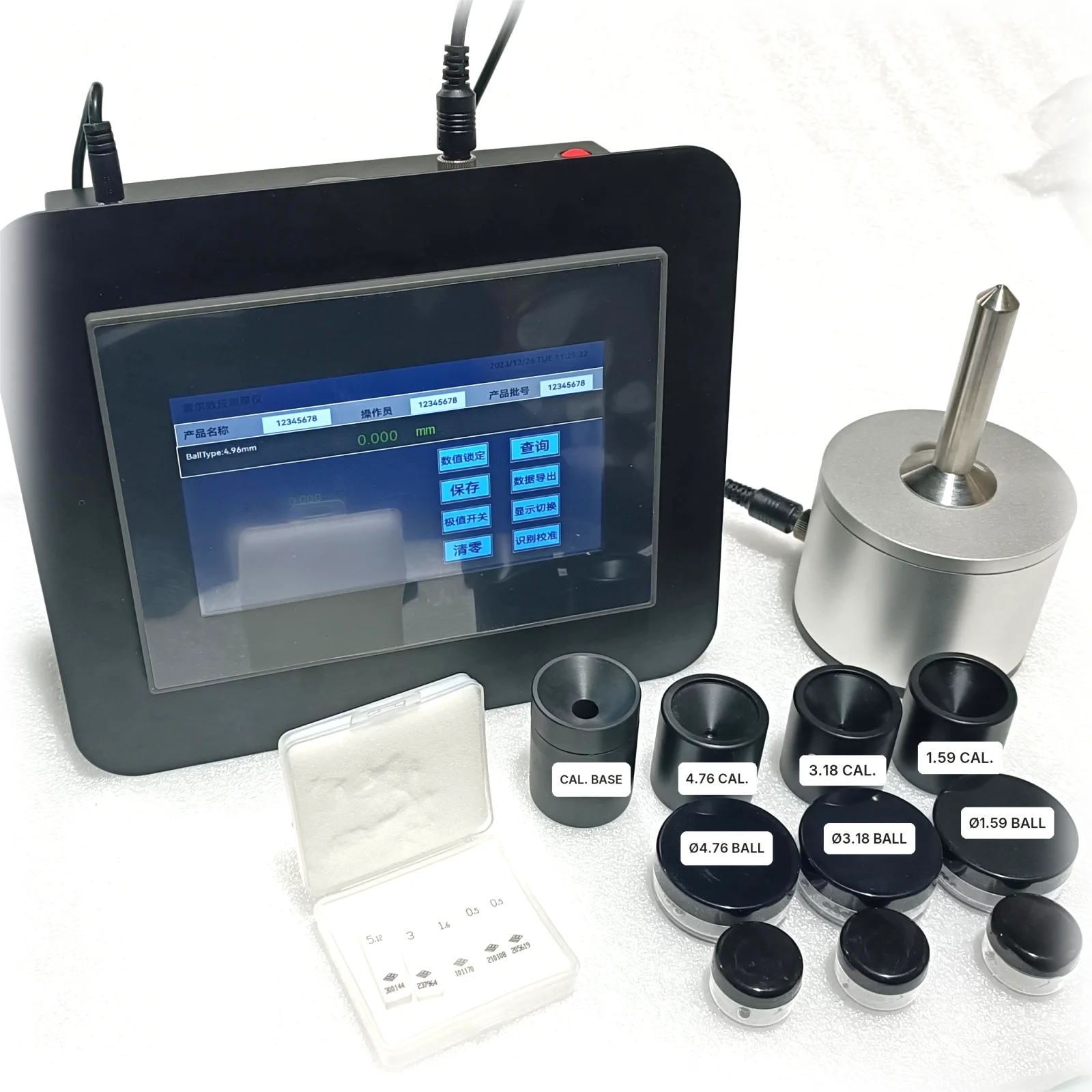
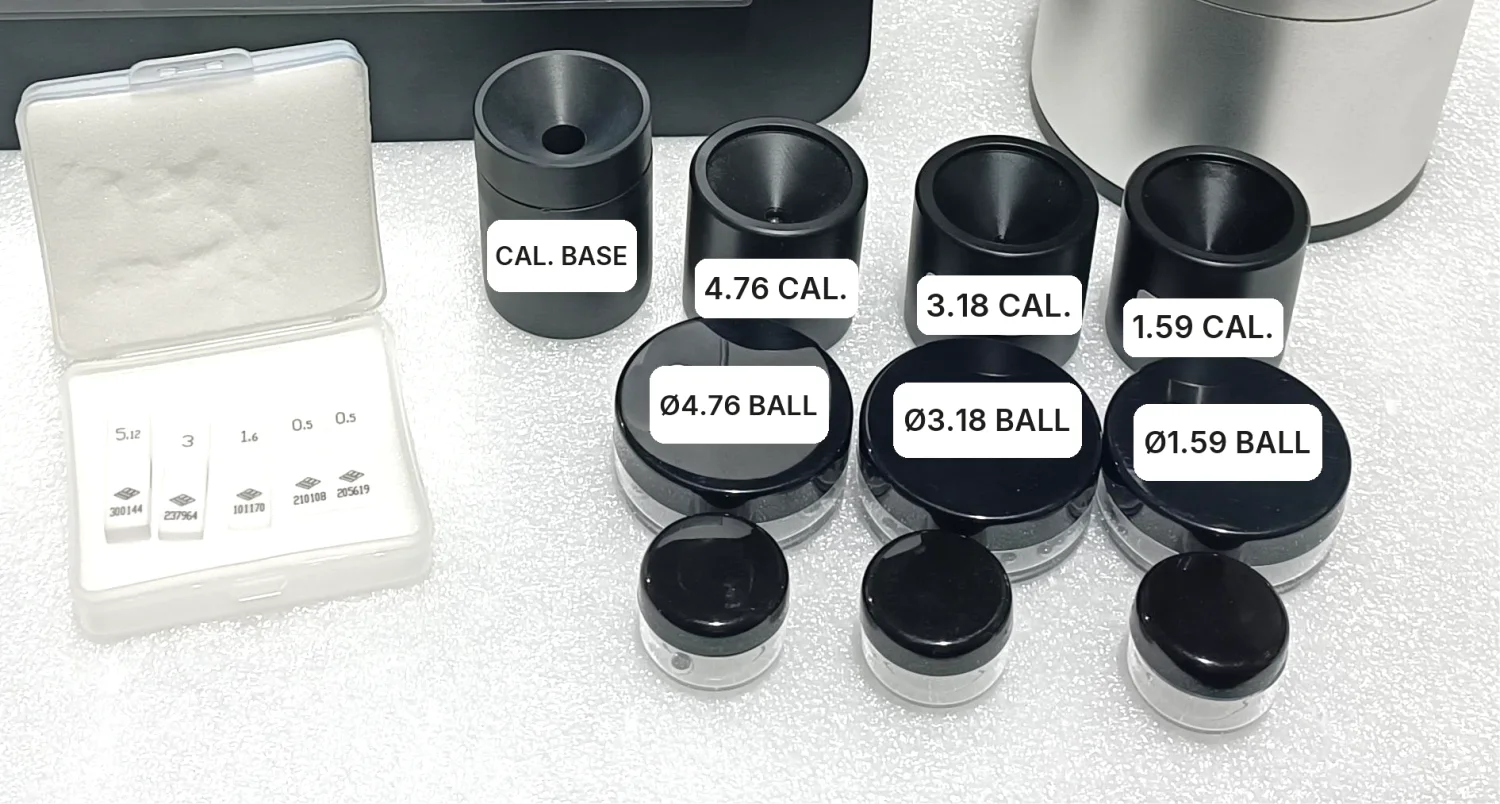
A working setup is more than the display unit. The KHT MTG-100 is supplied with the main unit, the probe, a data cable, a power cord, steel target balls, a calibration fixture, a zeroing fixture, calibration thickness shims and technical documents.
The target balls set the measuring range, and the fixtures and shims are what you use to calibrate for each ball.
Full specification and datasheet: KHT MTG-100 product page on packagingtestequipment.com